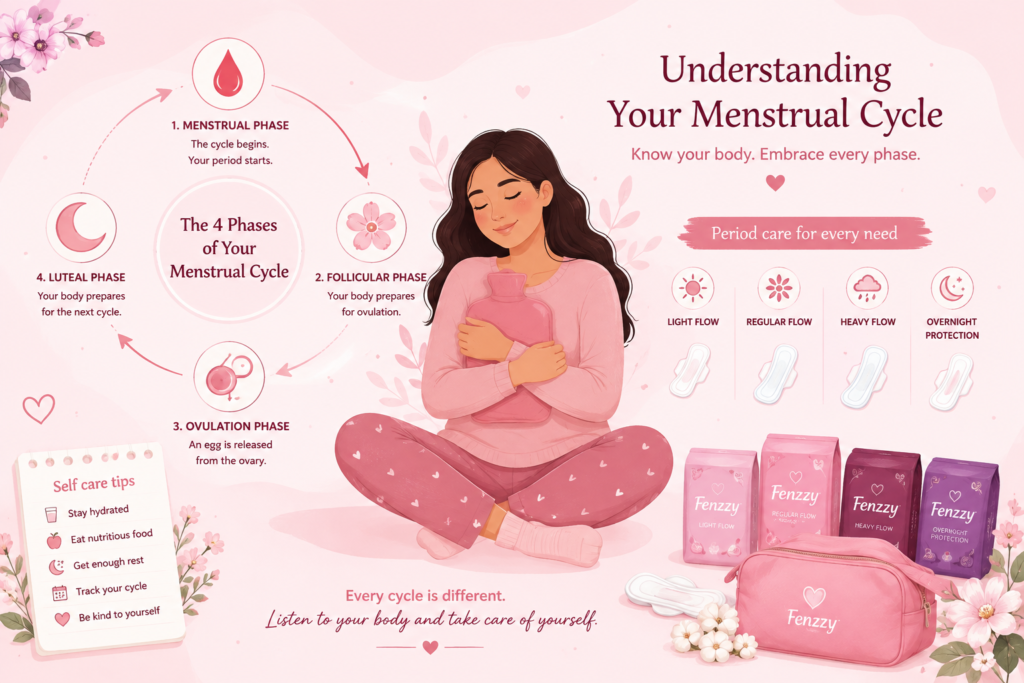
Your menstrual cycle is a natural process that involves much more than just the days when you have your period. Throughout the cycle, your body goes through changes in hormones, the ovaries, and the uterus. Understanding these changes can help you recognise your body’s natural patterns, prepare for your period, and make informed choices about your menstrual care. Every person’s menstrual cycle is different, and the length of a cycle, the number of days of bleeding, the amount of menstrual flow, and the symptoms experienced can vary from person to person. Your cycle can also change over time, so learning about the different phases can make it easier to understand what is happening in your body throughout the month.
What Is a Menstrual Cycle?
The menstrual cycle is counted from the first day of one period to the first day of the next period. During this time, hormones help control changes in the ovaries and uterus.
A cycle is often described as having four main phases:
- Menstrual phase
- Follicular phase
- Ovulation phase
- Luteal phase
These phases work together as part of a continuous cycle. The timing of each phase can vary from person to person, so not everyone will experience their cycle in exactly the same way.
1.The Menstrual Phase
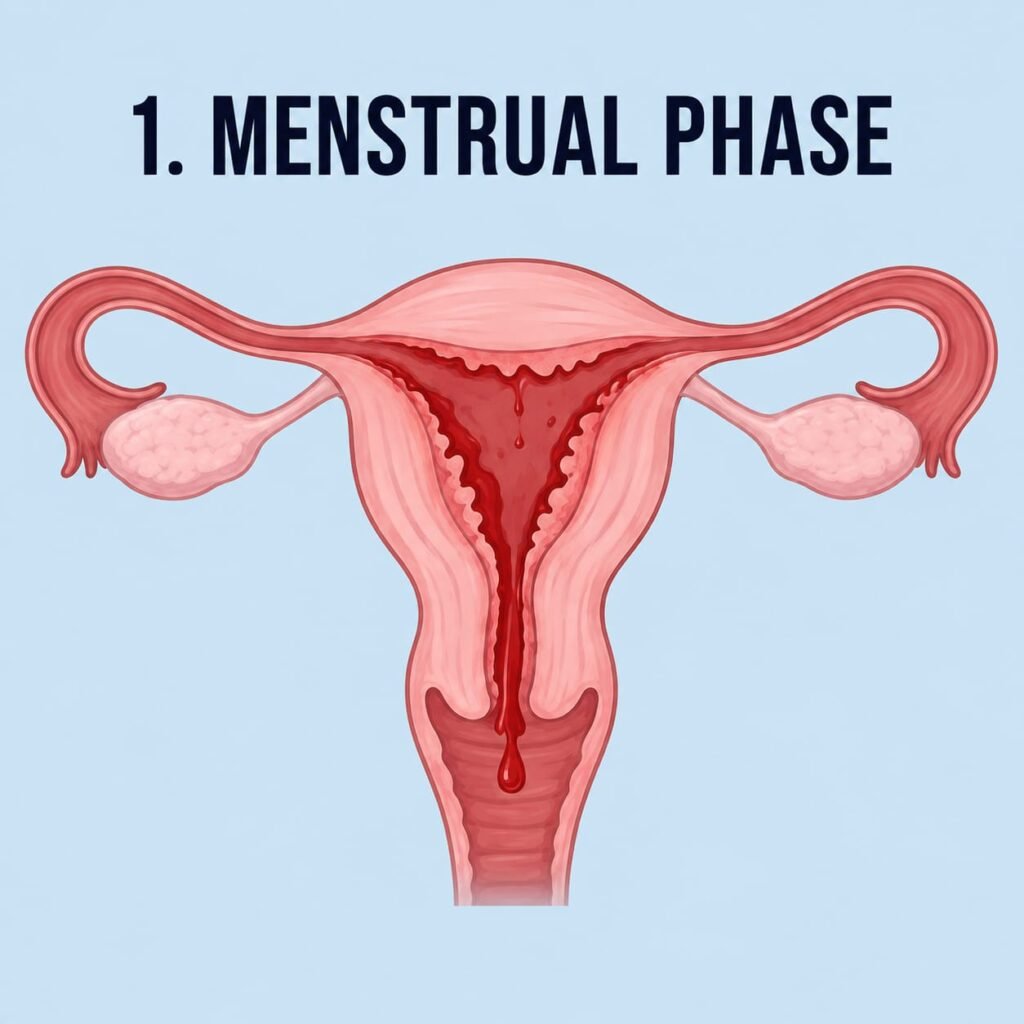
The menstrual phase is the part of the cycle most people know as their period. It begins on the first day of menstrual bleeding. During this phase, the uterus sheds its lining, which leaves the body as menstrual blood and tissue.
Your period may last for several days, and your flow may change during that time. For example, some people experience a heavier flow at the beginning of their period and a lighter flow towards the end.
You may also notice symptoms such as:
- Cramps
- Tiredness
- Bloating
- Mood changes
- Back discomfort
- Headaches
Not everyone experiences the same symptoms, and their intensity can vary from one cycle to another.
Because menstrual flow can change from day to day, it can be helpful to choose period protection according to your current needs.
2. The Follicular Phase
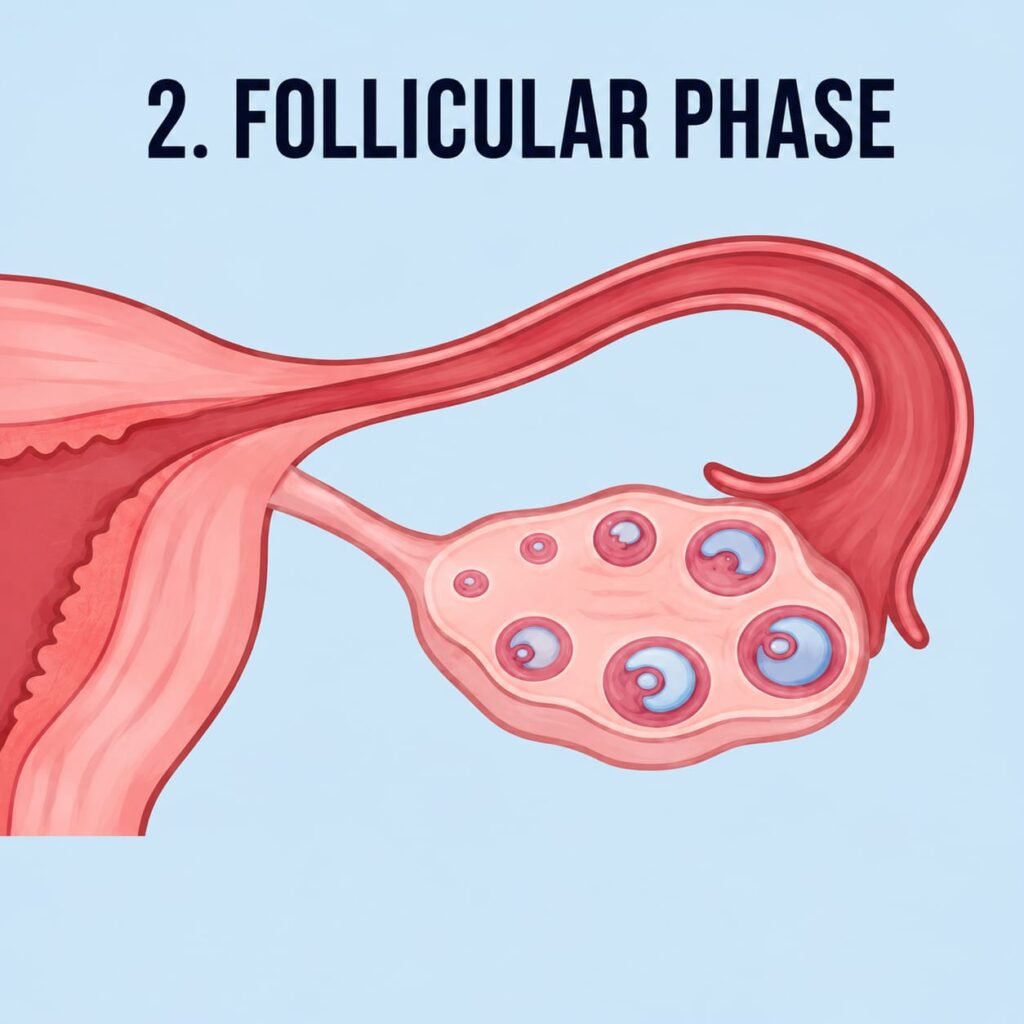
The follicular phase begins at the start of your period and continues until ovulation. During this phase, hormonal changes encourage follicles in the ovaries to develop. A follicle contains an immature egg.
At the same time, the lining of the uterus begins preparing for a possible pregnancy. Hormones play an important role in these changes.
The length of the follicular phase can vary. This is one reason why the timing and overall length of menstrual cycles can differ between individuals.
You may not always notice obvious physical changes during this phase, but your body is continuing important processes in preparation for the next stage of the cycle.
3. The Ovulation Phase
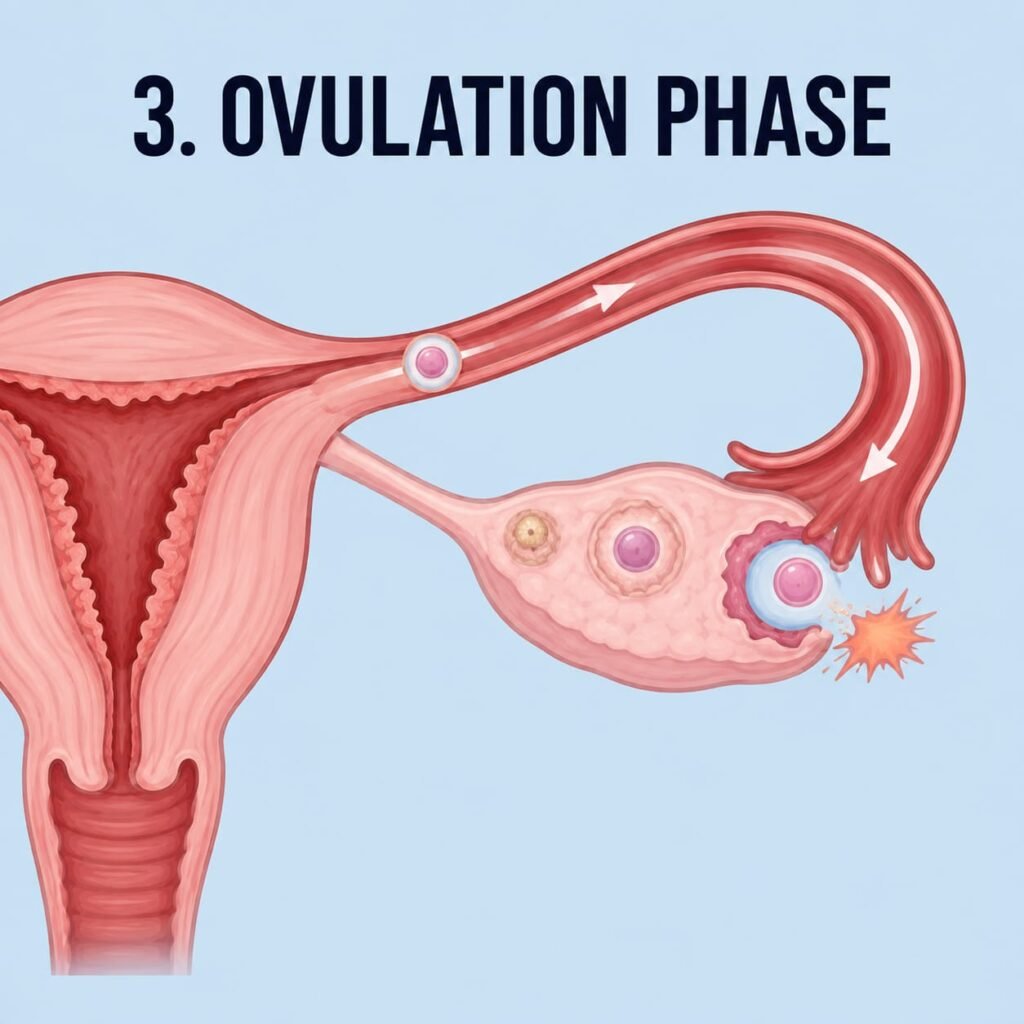
Ovulation happens when an egg is released from an ovary. It is an important part of the menstrual cycle and is associated with the fertile window.
People often hear that ovulation happens exactly in the middle of every cycle, but the timing can vary. It depends on the individual and the length of their cycle.
Some people may notice changes around ovulation, while others may not notice anything at all. Possible signs can include changes in cervical mucus or mild pelvic sensations, but these signs alone are not a reliable way to confirm ovulation.
Understanding that ovulation timing can vary is important when tracking your menstrual cycle.
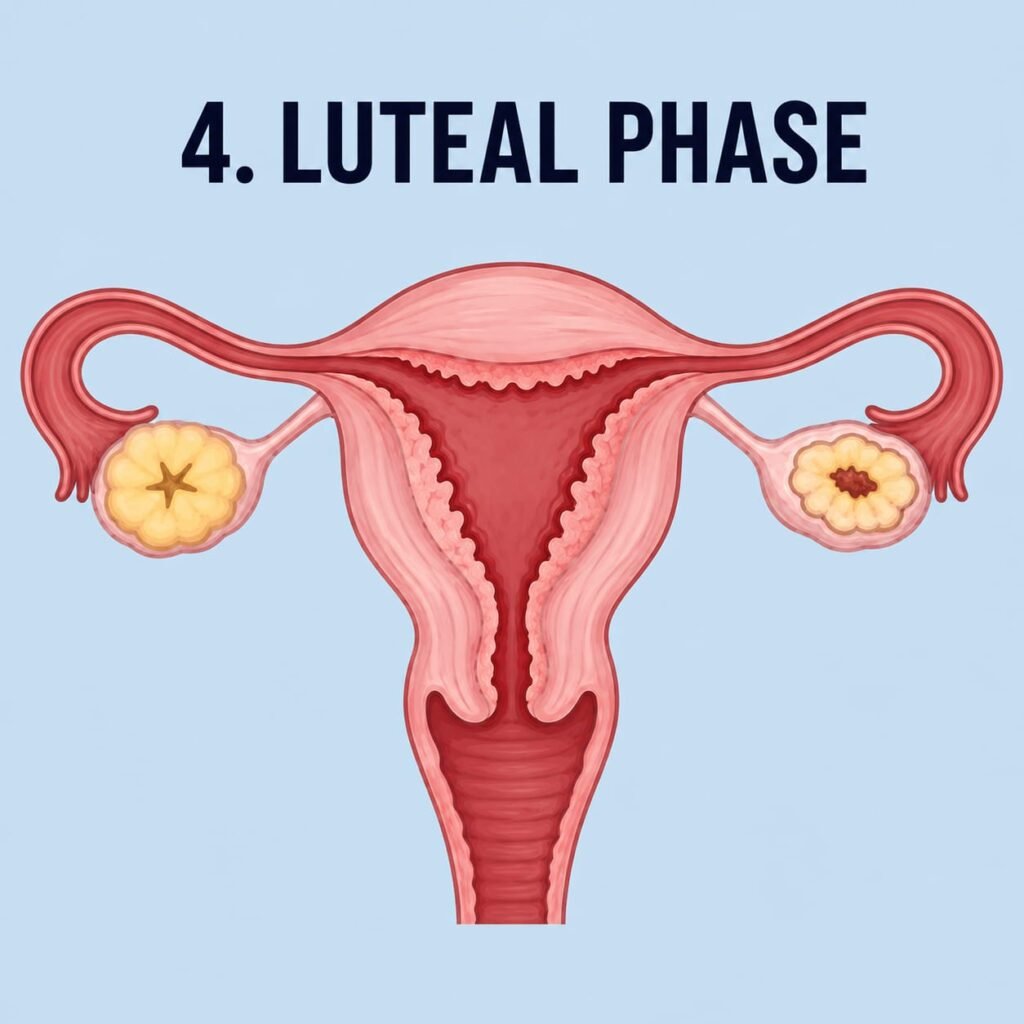
4. The Luteal Phase
After ovulation, the cycle enters the luteal phase. During this time, the body continues preparing the uterus for a possible pregnancy.
If pregnancy does not occur, hormone levels eventually change, and the uterine lining begins to break down. This leads to the beginning of the next menstrual period, and the cycle starts again.
Some people experience premenstrual symptoms during this phase. These can include:
- Mood changes
- Bloating
- Breast tenderness
- Changes in appetite
- Tiredness
- Mild cramps
Symptoms vary greatly from person to person. Having symptoms in one cycle does not necessarily mean you will experience them in exactly the same way during the next cycle.
Why Does Period Flow Change From Day to Day?
One of the most noticeable parts of a period is that the flow may not stay the same. You might experience a heavier flow on some days and a lighter flow on others.
This is normal for many people because the uterine lining does not leave the body at exactly the same rate every day.
Your period may include:
Light Flow
A smaller amount of menstrual bleeding. Some people may experience lighter flow at the beginning or end of their period.
Regular Flow
A moderate amount of bleeding that feels typical for an individual’s period.
Heavy Flow
A greater amount of menstrual bleeding. If you feel that your bleeding is unusually heavy or you are concerned about changes in your flow, it is important to speak with a qualified healthcare professional.
Overnight Needs
Your period-care needs can also be different while sleeping. Choosing a suitable product according to your comfort and coverage preferences can help you feel more prepared at night.
Understanding these changes can help you make practical decisions about the type of sanitary pad you want to use during different days of your period.
How Can Period Tracking Help?
Tracking your menstrual cycle can help you learn more about your body’s usual patterns. You can use a calendar, notebook, or period-tracking app.
You may want to record:
- The first day of your period
- How many days your period lasts
- Whether your flow is light, regular, or heavy
- Symptoms you notice
- Changes in your usual routine
Over time, this information can help you recognise patterns and prepare for your expected period.
However, period predictions are estimates. Your period may sometimes arrive earlier or later than expected.
Everyday Period Care Tips
A few simple habits can help you feel more prepared during your period.
Keep Period Essentials Ready
Keep sanitary pads and other essentials somewhere easy to access. You may also want to carry a small period-care pouch when travelling, going to school, college, or work.
Choose Protection According to Your Needs
Your flow and comfort needs may change throughout your period. Consider choosing the type of protection that suits your current flow and daily activities.
Change Your Pad Regularly
Follow the product instructions and change your sanitary pad as needed. Good menstrual hygiene includes keeping yourself comfortable and using clean period-care products.
Dispose of Used Pads Properly
Wrap a used sanitary pad and place it in a suitable waste bin. Sanitary pads should not be flushed down the toilet.
Stay Prepared When Travelling
Keep extra period products in your handbag or travel bag. Carrying a few extra essentials can help you feel prepared if your period starts unexpectedly.
Understanding Your Cycle Can Help You Feel More Prepared
Learning about the menstrual cycle is not about expecting every cycle to follow an exact schedule. Instead, it is about becoming more familiar with your own body’s patterns.
You may notice that your flow changes throughout your period, that you experience certain symptoms at similar times, or that your cycle length varies occasionally. Tracking these patterns can help you understand what is usual for you.
If you notice a sudden or significant change in your menstrual cycle, bleeding, or symptoms that concerns you, seeking advice from a qualified healthcare professional is a sensible step.
Period Care for Different Flow Needs
Because period flow can change from day to day, having suitable options available can make your period-care routine more convenient. The Fenzzy Cycle Pack is designed around the idea of changing flow needs, bringing together sanitary pad options for light flow, regular flow, heavy flow, and overnight needs in one convenient pack.
Instead of relying on a single option throughout your period, you can consider your flow and choose the option that best suits your needs for that particular day.
The goal is simple: helping you stay prepared throughout your menstrual cycle with convenient period-care choices.
Your menstrual cycle is a natural and ongoing process that includes much more than your monthly period. From the menstrual phase and follicular phase to ovulation and the luteal phase, your body goes through different changes throughout the cycle.
Remember that every cycle is unique. Your period length, flow, and symptoms may not be the same as someone else’s, and they may sometimes vary from one month to another.
By understanding your cycle, tracking your usual patterns, and preparing for changing flow needs, you can make your menstrual-care routine feel simpler and more organised.
Every cycle is different. Understanding yours can help you feel more prepared, comfortable, and confident.
Fenzzy — Feel Fenzzy. Feel Free.